Posted on

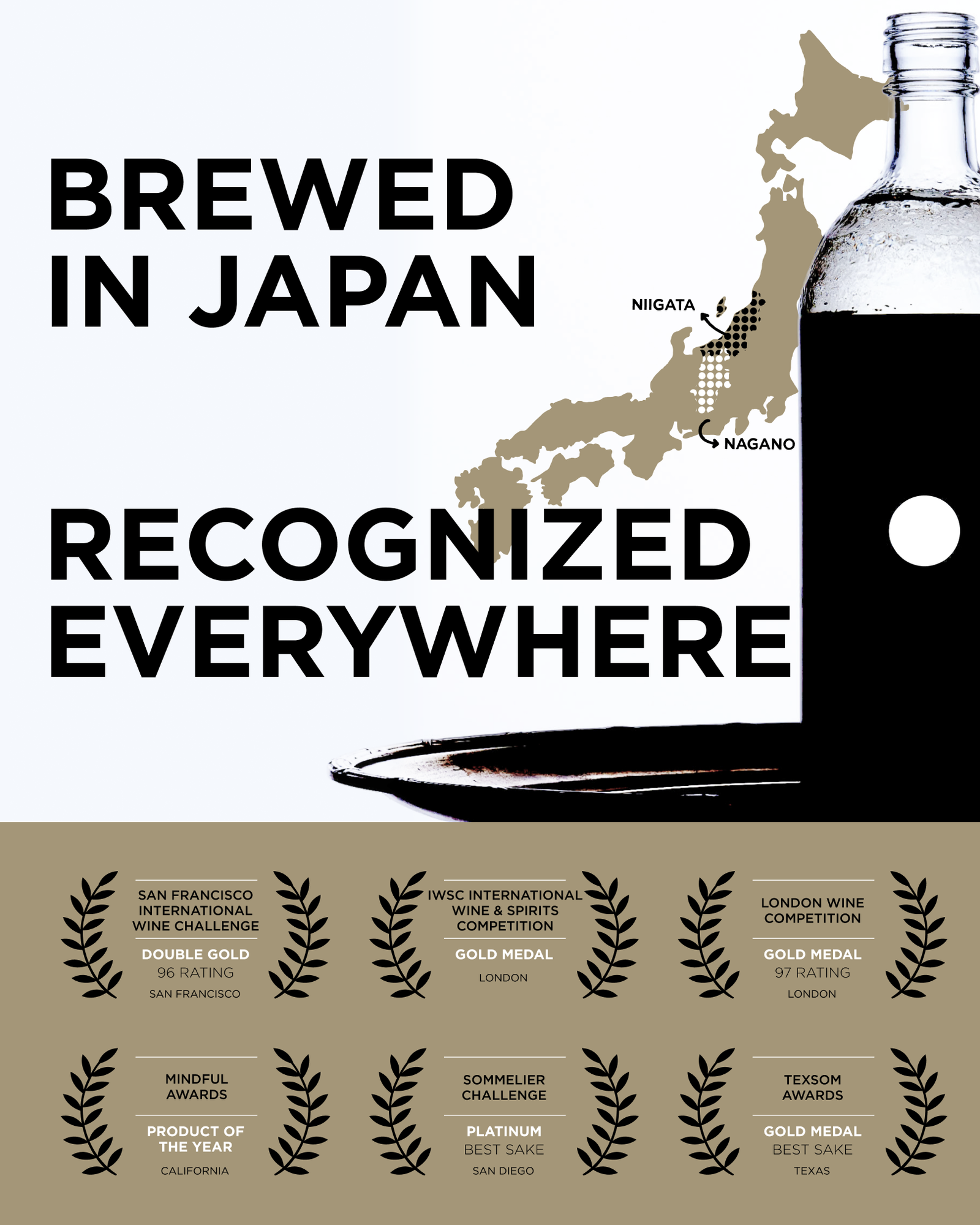
BREWED IN JAPAN. RECOGNIZED EVERYWHERE.

Excellence doesn’t happen by accident.

Every bottle of SOTO is meticulously brewed at the source, using the mineral-rich waters of Niigata and the high-altitude snowmelt of Nagano, Japan.
No shortcuts. No substitutes.
Just centuries of craftsmanship, translated for a modern palate. 
Our commitment to this tradition has earned recognition across the world.
 
San Francisco International Wine Challenge
Double Gold. 96 Rating
 
IWSC International Wine & Spirits Competition
Gold Medal
 
Mindful Awards
Product of the Year
 
TEXSOM Awards
Gold Medal. Best Sake
 
Sommelier Challenge
Platinum. Best Sake. 94 Rating
 
London Wine Competition
Gold Medal. 97 Rating

Kanpai.

Posted on

In Memory of Yayoi Kusama: Polka Dots, Architecture, and the Art of the Infinite

With the passing of Yayoi Kusama (1929–2026), we pause to honor a cultural icon whose fearless devotion to repetition, space, and human ePhilip motion reshaped how the world perceives art, identity, and the infinite.

To Kusama, the polka dot was not merely an ornament. It was a philosophy:

“A polka dot has the form of the sun, which is a symbol of the energy of the whole world and our living life, and also the form of the moon, which is calm. Round, soft, colorful, senseless and unknowing. Polka dots become movement… Polka dots are a way to infinity.”

She viewed every dot as a singular entity, an individual and its own self-contained universe interacting with the vastness surrounding it. In an increasingly noisy world, her work invited us to dissolve our boundaries, become one with the environment, and find quiet wonder in the present moment.

A Shared Dialogue: The Glass House (2016)

In September 2016, SOTO had the profound honor and privilege of supporting a monumental exhibition that brought her philosophy to life in an unforgettable way: Dots Obsession – Alive, Seeking for Eternal Hope at Philip Johnson’s iconic The Glass House in New Canaan, Connecticut.

The installation was a collision between two masters of space. Philip Johnson had sculpted a private universe framed in total transparency, dissolving the barrier between the domestic interior and the surrounding landscape. Kusama enveloped this modernist jewel in vibrant red polka dots, transforming the entire structure into a life-sized, breathing “infinity room.”

Looking out through those glass walls, visitors saw the natural world reframed through Kusama’s eyes. It was a breathtaking study in what happens when distinct perspectives meet, breathing new life, light, and dimension into established forms.

For our team at SOTO, whose name literally translates to “outside” (外), witnessing that synthesis left an indelible mark on how we think about space, ritual, and bridging tradition with modern expression.

Yayoi Kusama leaves behind a legacy that transcends galleries and museums. She taught generations of artists, designers, and creators to embrace their individuality without fear, to see boundless possibility in the simplest shapes, and to approach creation with unwavering dedication.

We extend our deepest condolences to her family, collaborators, and the countless admirers around the world who found comfort and inspiration in her rooms of infinity.

Thank you, Yayoi Kusama, for sharing your universe with ours.

Posted on

Founder’s Note: SOTO Junmai Ginjo, A New Expression

With SOTO Junmai Ginjo, our goal was to set this sake apart from our current lineup—not just by introducing a new region, but by exploring a unique taste profile and expression. We wanted to provide sake enthusiasts and sommeliers with something truly distinctive and memorable. This release represents our commitment to innovation and offering new experiences that elevate the SOTO portfolio.

Our Junmai Ginjo offers a balanced, medium-bodied profile with a sophisticated, fruit-forward character. When you first experience the aroma, you’ll find notes of white grape, apple, and banana bread mingling with hints of basil, all supported by a refined, mineral-driven backbone. On the palate, we’ve ensured a vibrant acidity and expressive notes of subtle berry and stone fruit, adding a gentle complexity that enhances both structure and length. We’ve achieved a textured body that is simultaneously sharp and silky, offering a robust umami foundation. This allows our sake to pair seamlessly with a broad spectrum of cuisines—from rich proteins and artisanal cheeses to complex charcuterie boards—while maintaining a dynamic, kaleidoscopic style.

In continuation of our tradition of visually striking brand identity, our new Junmai Ginjo pack features our classic black and white design cues, offset by a beautiful grey label designed by Joe Doucet. We chose this specific grey tone as a tribute to Nagano’s wild macaques (Japanese Snow Monkeys), famous for soaking in natural hot springs during winter—one of the most iconic wildlife images in Japan.

We’ve crafted this sake for total purity and authenticity; it contains no additives, preservatives, or sulfites, making it all-natural and gluten-free. After bottling at the origin in Japan, we handle every shipment with obsessive attention, including temperature-controlled shipping and ultraviolet-protected bottles to preserve its integrity. For us, this exemplifies the uncompromising character we strive for—ideal for the discerning connoisseur.

SOTO Junmai Ginjo is best enjoyed chilled. You can find it in 720ml bottles at select restaurants and premium retailers nationwide (suggested retail price: $39.99).

[Learn more and shop the collection here]

Posted on

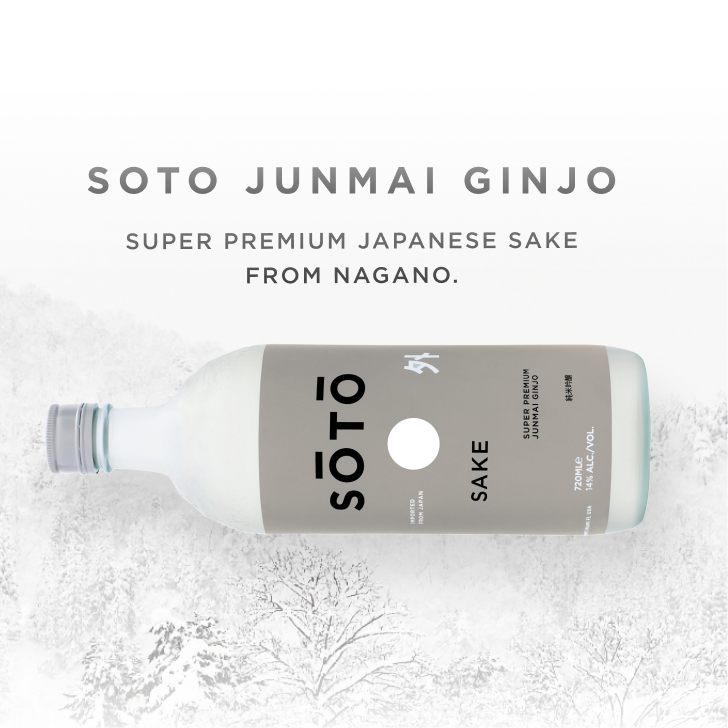
New Super-Premium SOTO Junmai Ginjo

We are pleased to announce the release of our SOTO Junmai Ginjo Super-Premium Japanese Sake, now available in select markets across the United States. The launch of this expression represents the continued evolution of our premium portfolio and our commitment to an “outside” perspective on traditional craft.We meticulously craft and bottle our Junmai Ginjo in the Nagano prefecture, drawing on the region’s storied reputation for purity and craftsmanship. The refined character of this sake emerges from our use of pristine snowmelt sourced from the majestic Japanese Alps, which is naturally filtered as it journeys through layers of mineral-rich earth.
For us, this crystalline, Alpine water is essential—it imparts a remarkable clarity and balance that allows our sake to express its signature elegance, depth of flavor, and polished complexity. Every element of its origin harmonizes to deliver a super-premium sipping experience, distinguished by a vibrant profile that we are proud to share.
We chose Nagano not only for its international prominence as the host of the 1998 Winter Olympics but for its celebrated culinary heritage, cultivating Japan’s finest specialties like wasabi and soba. This terroir offers a unique intersection of altitude, climate, and water purity. By embracing the region’s exceptional hydrology and cold-climate brewing conditions, we ensure that every bottle of SOTO maintains the uncompromising quality our community expects.

SOTO JUNMAI GINJO QUICK FACTS
    • Product Name: SOTO Junmai Ginjo Super-Premium Japanese Sake
    • Classification: Junmai Ginjo
    • Origin: Nagano Prefecture, Japan
    • Water Source: Snowmelt from the Japanese Alps
    • Alcohol by Volume (ABV): 14%
    • Bottle Size: 720ml
    • Suggested Retail Price (SRP): $39.99
    • Dietary Profile: All-natural, gluten-free, no sulfites, no preservatives, and no added sugar

Posted on

2025 Year in Review

As we reflect on 2025, SOTO Sake celebrates a year defined by deliberate growth and the pursuit of modern innovation in the premium Japanese spirits category.

The Launch of a New Modern Icon

One of the highlights of our year was the official rollout of the SOTO Junmai Ginjo. Sourced from the pristine waters of Nagano, Japan, and crafted with Miyamanishiki rice, this expression has quickly become a cornerstone of our collection. Its 55% polishing ratio and smooth, fruit-forward profile represent our dedication to bringing high-quality Japanese heritage to the modern U.S. palate.

This year, we moved “SOTO” (outside) the traditional boundaries of sake: